

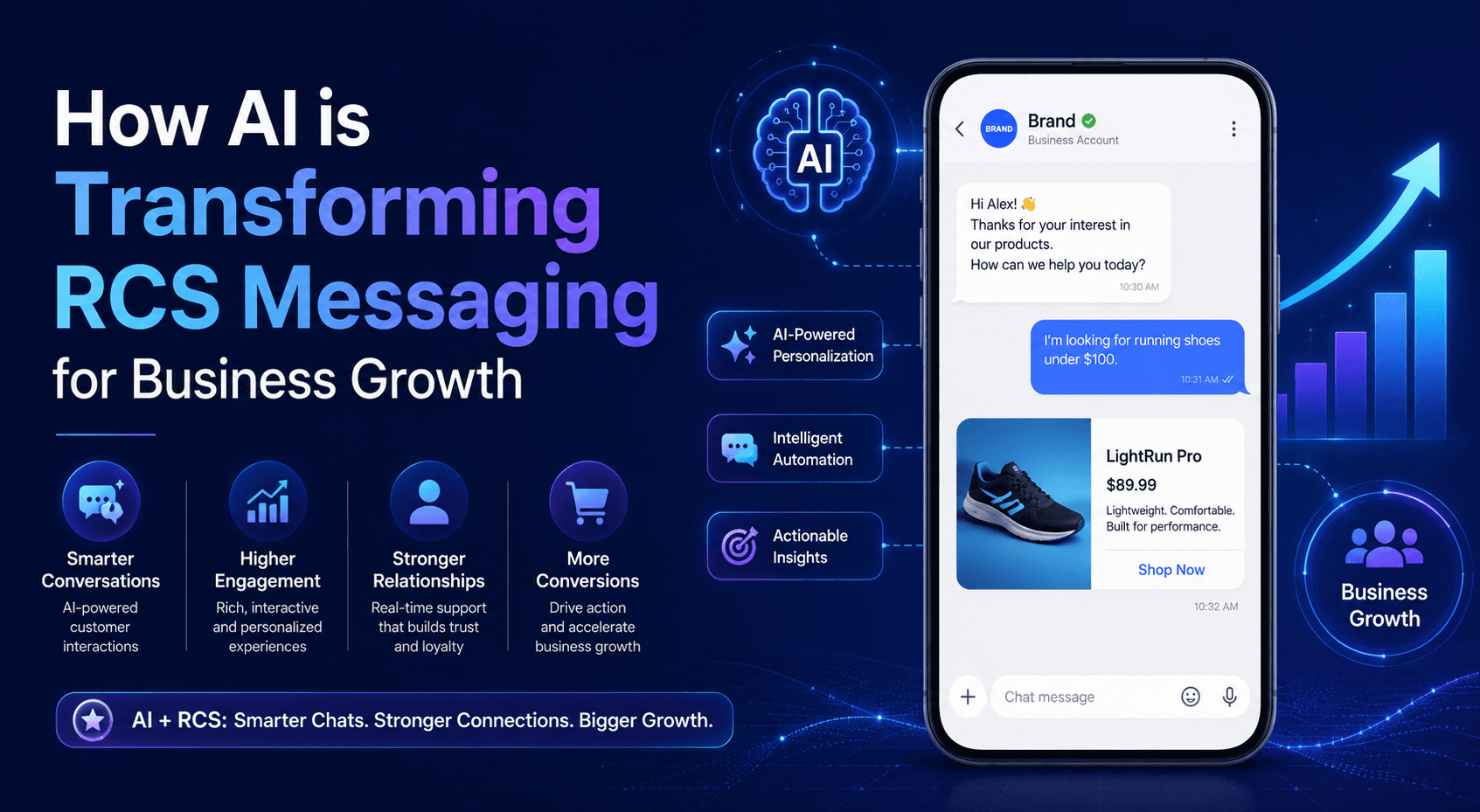
Text messaging has come a long way from plain SMS, and businesses are taking notice. Rich Communication Services, or RCS, has turned the humble text thread into an interactive storefront, complete with images, buttons, and real-time replies. Pair that with artificial intelligence, and brands now have a channel that doesn't just send messages but understands customers, predicts their needs, and responds intelligently around the clock. This combination is quickly becoming one of the most powerful tools in a modern marketing and customer service strategy.
What is RCS Messaging?
RCS Messaging is the next-generation successor to SMS, built to bring messaging apps' features directly into a phone's native texting experience. Instead of plain text, businesses can send high-resolution images, carousels, branded logos, suggested replies, and interactive buttons, all within a verified, trusted sender profile. Customers get read receipts and typing indicators, much like they would on WhatsApp or iMessage. For businesses, this means messages look more like a sleek in-app experience than a generic text, which naturally boosts engagement and trust.
What is AI Messaging?
AI Messaging refers to the use of artificial intelligence, including natural language processing, machine learning, and predictive algorithms, to power conversations and campaigns across messaging channels. Rather than relying purely on static, pre-written scripts, AI messaging systems can interpret customer intent, generate contextually relevant responses, and adapt content based on individual behavior and preferences. This can range from a chatbot answering support questions to a recommendation engine deciding which product to feature in a promotional text. When layered onto a rich channel like RCS, AI turns one-way broadcasts into dynamic, two-way conversations.
6 Ways AI Enhances RCS Messaging for Business Growth
When AI and RCS work together, the result is a messaging channel that feels less like marketing and more like a helpful conversation. Here are six ways that combination plays out in practice.
Personalized Messaging
AI analyzes purchase history, browsing behavior, and demographic data to tailor message content for each recipient. Instead of a generic discount blast, a customer might receive a message recommending a product based on what they recently viewed, complete with their preferred size or color already highlighted.
Intelligent Chatbots
RCS supports rich, app-like chat experiences, and AI-powered chatbots take full advantage of this. These bots can answer FAQs, walk customers through order tracking, or handle returns, all within the native messaging app, without the customer needing to download anything or wait on hold.
Predictive Analytics
By studying patterns in customer engagement, AI can forecast which messages are likely to convert, which customers are at risk of churning, and the best time to reach a particular segment. This allows businesses to be proactive rather than reactive with their messaging strategy.
Automated Campaigns
AI can manage the entire lifecycle of a campaign, from segmenting audiences to scheduling sends to optimizing follow-ups. Marketing teams set the goals and guardrails, and the system handles execution, freeing up time for strategy rather than manual list management.
Sentiment Analysis
Understanding how a customer feels matters as much as what they say. AI can scan incoming replies for tone and sentiment, flagging frustrated customers for human follow-up while letting satisfied ones continue through an automated flow, which improves both efficiency and customer experience.
Scalability and Efficiency
A small support team can't manually personalize thousands of conversations, but AI can. It allows businesses to maintain a consistent, high-quality messaging experience whether they're talking to a hundred customers or a million, without a proportional increase in headcount.
How AI-Powered RCS Messaging Drives Business Growth
When personalization, automation, and rich media come together, the impact on the bottom line becomes clear. Open and response rates on RCS already tend to outperform traditional SMS thanks to its visual, interactive format, and AI sharpens that further by ensuring the right message reaches the right person at the right time. Customer service costs drop as chatbots resolve routine inquiries instantly. Conversion rates climb as product recommendations and offers feel relevant rather than random. And because AI continuously learns from each interaction, performance tends to improve over time rather than plateau, giving businesses a messaging channel that compounds in value the longer it's used.
Best Practices for Implementing AI in RCS Messaging
Getting the most out of AI-powered RCS starts with clean, well-organized customer data, since even the smartest algorithm is only as good as the information it's trained on. Businesses should also be transparent about chatbot interactions, making it easy for customers to reach a human when needed, which builds trust rather than eroding it. Testing matters too: running A/B tests on message timing, tone, and content helps refine what AI optimizes for. Compliance shouldn't be an afterthought either, since messaging regulations and opt-in requirements vary by region and carrier. Finally, it helps to start with a narrow, well-defined use case, such as order updates or appointment reminders, before expanding into broader campaign automation.
Future Trends in AI-Powered RCS Messaging
Looking ahead, RCS adoption is expected to keep climbing as more carriers and devices support it globally, giving AI messaging an even larger audience to reach. Generative AI will likely play a bigger role in real-time content creation, crafting unique message copy and visuals on the fly rather than pulling from fixed templates. Voice and multimodal integration may also emerge, letting customers interact with brands through a mix of text, images, and even voice notes within the same RCS thread. As privacy regulations tighten, expect AI systems to lean more heavily on first-party data and on-device processing to deliver personalization without compromising customer trust.
Conclusion: Boost Your Business with AI-Driven RCS Messaging
RCS messaging has already raised the bar for what a text conversation can look like, and AI is what makes that conversation genuinely smart. Together, they give businesses a channel that's visually engaging, highly personalized, and capable of scaling without losing the human touch. Companies that invest in AI-powered RCS now are positioning themselves to build stronger customer relationships, run more efficient campaigns, and ultimately drive sustainable growth in an increasingly conversational, mobile-first world.